
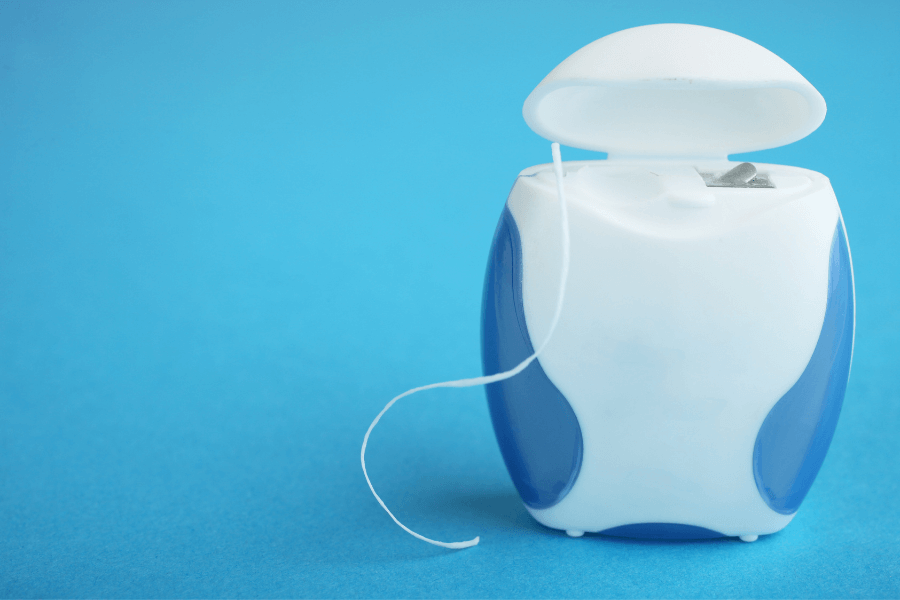
Can dental floss be toxic? What you need to know to use it safely
Dental floss has always been one of the greatest allies of oral health. It reaches where the toothbrush can’t, removes plaque and food debris, and helps prevent gingivitis, interproximal caries and periodontal disease.
In recent years, however, a question has started to appear in dental offices and on social media: “Can dental floss be toxic?”
This concern didn’t come out of nowhere. Recent studies have investigated the presence of PFAS (the so-called “forever chemicals”) in certain types of dental floss – especially those that are ultra “slippery,” made with PTFE. These compounds are known for their persistence in the body and in the environment and have been linked to possible systemic health effects.
The key issue is not to stop using dental floss, but to understand which types to choose and how to reduce unnecessary exposure to these substances without compromising oral hygiene.
What are PFAS and why might they be in your dental floss?
PFAS (per- and polyfluoroalkyl substances) are a large family of synthetic compounds that have been used for decades in a variety of products because they are resistant to water, grease and stains. They are found in nonstick coatings, food packaging, waterproof fabrics, firefighting foams and, in some cases, in personal care products.
In the context of dental floss, they appear mainly in flosses described as:
- “super slippery”
- “Glide-type”
- made with PTFE (polytetrafluoroethylene), the same polymer used in some nonstick coatings
This material gives the floss a very pleasant gliding sensation, especially for people with tight contact between their teeth. However, it may also be associated with the presence of fluorinated compounds that fall into the PFAS category.
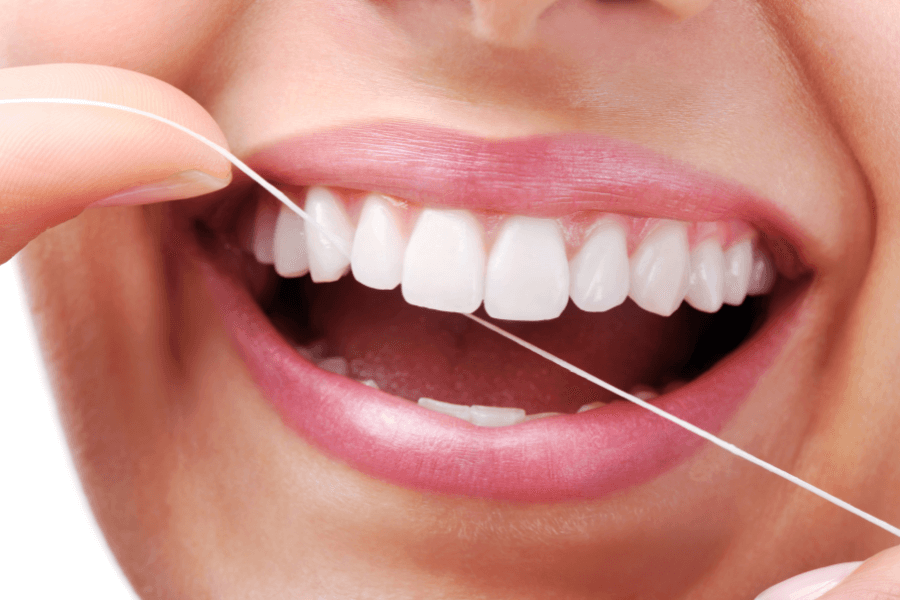
What science already knows about floss, PFAS and exposure in the body
Two bodies of evidence have gained prominence in recent years:
1. 2019 study with women using “Glide-type” floss
A study published in 2019 in the Journal of Exposure Science & Environmental Epidemiology evaluated 178 women and investigated behaviors associated with higher levels of PFAS in the blood. Among these behaviors was the use of a specific dental floss made from PTFE (such as the well-known “Glide” type).
Participants who reported using this type of floss had higher levels of a specific PFAS (PFHxS) compared with those who did not use it. Laboratory tests also detected fluorine (indicative of fluorinated compounds) in some of these flosses.
This study was important because it suggested that certain PFAS-coated or PFAS-based dental flosses may contribute to the body’s overall burden of these substances.
2. 2025 study with thousands of adults
In 2025, a new study – also published in the Journal of Exposure Science & Environmental Epidemiology – analyzed data from 6,750 adults from U.S. national health surveys (NHANES). This study compared people who used dental floss with those who did not and evaluated different PFAS in their blood.
The results showed a more complex picture:
- Dental floss users had slightly higher levels of some specific PFAS (such as PFOA and PFOS);
- At the same time, the overall “PFAS burden” in the body was, on average, even lower in floss users than in non-users, when evaluated as a whole.
In other words: dental floss may be one route of exposure to certain PFAS, especially in flosses made with PTFE, but it is not the only one. Water, food, packaging, fabrics and other everyday products also contribute to this burden.
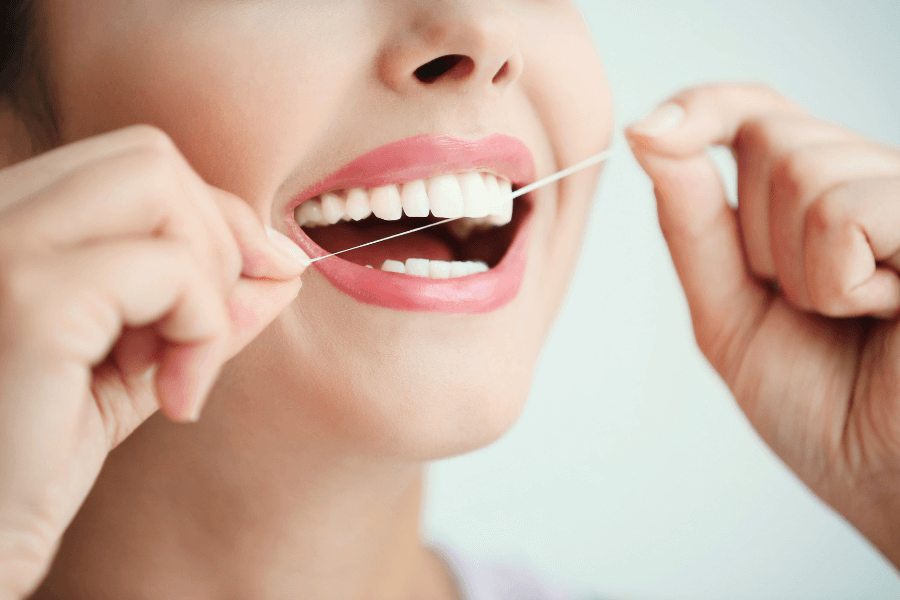
So… is dental floss bad for your health?
This is the question that scares people the most – and the answer needs to be balanced.
What we know today:
- PFAS are associated, in observational studies, with possible effects on the hormonal system, metabolism, liver, kidneys, immune system and the risk of some types of cancer; there is still a lot under investigation, but the concern is real.
- Studies suggest that some dental flosses containing PTFE/PFAS can indeed contribute to a portion of this exposure.
- On the other hand, not using dental floss clearly and consistently increases the risk of gingivitis, periodontitis, interproximal caries, bad breath and tooth loss – problems with a direct and well-documented impact on overall health and quality of life.
So the most honest question is not “Is using dental floss bad?”, but rather:
“Which dental floss should I choose to keep my oral health up to date while reducing unnecessary exposure to PFAS?”
No reputable dental society recommends stopping the use of dental floss because of PFAS. What environmental health experts and consumer protection organizations have been advocating is: keep flossing, but prefer options without PTFE and without fluorinated compounds.
How to tell if your dental floss may contain PFAS
Here are some practical clues when checking the label, description or product website:
- Look for terms such as PTFE, polytetrafluoroethylene or words with “fluoro” in the ingredient list or technical description;
- Flosses described as “super slippery,” “Glide” or with similar technology often use PTFE;
- Brands that position themselves as “PFAS-free,” “fluorine-free,” “no fluorinated compounds” or that highlight natural materials tend to be safer options from a chemical standpoint.
When the information is not clear, that alone is already a sign to look for alternatives with a more transparent composition.
Safer dental floss options for everyday use
Today, there are several effective alternatives that do not depend on PTFE to glide between the teeth:
- Floss made of silk or cotton with natural wax
- Floss made of plant fibers, such as bamboo
- Nylon floss with plant-based wax (for example, candelilla or carnauba)
- Floss with activated charcoal, as long as no fluorinated compounds are added
In addition, consumer organizations and independent tests have been publishing lists of PFAS-free dental floss brands, helping patients make more informed choices.
More important than the brand name is the concept: choose flosses that are free of PTFE and fluorinated compounds, with a simple and clearly described composition.
How to build a smart and safe oral hygiene routine
There is no oral health without routine. Choosing dental floss is one piece of this puzzle, which should also include:
- Careful toothbrushing after meals, with proper technique and a toothbrush in good condition;
- Daily use of dental floss or dental tape, preferably without PTFE/PFAS, adapted to the anatomy of your teeth and your manual skills;
- Possible use of interdental brushes in areas with larger spaces, always under professional guidance;
- Regular professional cleanings and dental check-ups to monitor gums, tooth structure, restorations and oral mucosa;
- Open discussion with your dentist about specific products (flosses, toothpastes, mouthwashes), especially for patients with systemic conditions, pregnant women or people who want to minimize exposure to persistent chemicals as much as possible.
The goal is always the same: protect teeth and gums, ensuring a healthy, functional and comfortable mouth, without ignoring scientific advances on the impact of certain substances on the body.
Take care of your oral health with information – at Clínica Debora Ayala
Asking whether dental floss can be toxic is actually a sign of health maturity: you don’t want to simply follow recommendations automatically; you want to understand what you’re putting in your body and how that relates to your longevity and well-being.
At Clínica Debora Ayala, we bring together:
- an integral view of oral health,
- constant updating on topics such as PFAS, dental materials and long-term safety,
- and personalized care that takes into account your health history, your habits and your goals for the future.
If you have doubts about the type of dental floss you use, want to review your hygiene routine or would like a complete assessment of your oral health, we are ready to guide you with clarity, scientific evidence and genuine care.
Get in touch and schedule a personalized appointment at Clínica Debora Ayala. Let’s build together a care routine that protects your teeth, your gums – and also your overall health.
Dr. Debora Ayala – CRO 41.974/SP
Read Also
