

Why have a dental check-up even when there is no pain?
The absence of pain does not necessarily mean that everything is fine with your oral health. Many changes begin discreetly and may progress for months without causing noticeable discomfort. Small carious lesions, problems with restorations, tooth wear, and changes in the gums are some examples of conditions that do not always present symptoms in their early stages.
That is exactly why a dental check-up should not take place only when pain appears. A preventive evaluation makes it possible to observe signs that the patient cannot identify alone and to monitor changes that may seem minor but deserve attention before they become more extensive.
At Clínica Debora Ayala, the check-up is performed through a comprehensive assessment of the smile. It is not only about looking for cavities. It is an opportunity to evaluate teeth, restorations, gums, bite, habits, signs of wear, and other aspects that influence health, function, and aesthetics.
Taking care of a problem early is often simpler, more conservative, and more comfortable than treating it after it has already progressed.
Not every dental problem begins with pain
Pain is often interpreted as the main sign that something is wrong. However, many dental problems do not begin this way. In certain situations, discomfort appears only when the change has already reached a more sensitive area or caused greater damage to the dental structure.
An early carious lesion, for example, may begin as a subtle change on the enamel surface without causing pain. The same can happen with small defects at the margins of a restoration, changes in the gingival contour, or wear caused by habits, diet, clenching, or bruxism.
This means that waiting for a tooth to hurt before seeking care may reduce the possibilities for a more conservative intervention. When diagnosis occurs early, it is often possible to monitor the condition, control risk factors, or perform less extensive treatments.
The purpose of the check-up is precisely to identify what has not yet become an emergency.
Early carious lesions may progress silently
Dental caries does not appear overnight as a large and painful cavity. It develops from an imbalance involving biofilm, diet, saliva, and dental structure. In its early stages, it may appear as an area of enamel demineralization, often without any symptoms.
When identified early, this change can be evaluated within a preventive and minimally invasive strategy. Depending on the stage, lesion activity, and the patient’s individual risk, management may involve changes in oral hygiene, dietary control, clinical monitoring, and measures aimed at protecting dental structure.
When evaluation is postponed, the lesion may progress into deeper areas. At that point, treatment tends to require greater intervention and the removal of more tissue.
For this reason, the goal of a check-up is not only to locate cavities. It is to recognize early signs and understand whether there is an ongoing process.
Restorations also need to be monitored
A restoration should not be considered permanent simply because it is not causing pain. Over time, it may undergo wear, discoloration, small fractures, or changes in the adaptation between the restorative material and the tooth.
These changes do not always require immediate replacement. In many cases, a restoration can be monitored, polished, repaired, or receive a localized intervention. But that decision depends on clinical evaluation.
When there are marginal defects, biofilm accumulation, or difficulty cleaning the area, there may be a risk of gingival inflammation or the development of a new carious lesion around the restoration. Because this process may be silent, the patient does not always notice that something has changed.
During the check-up, we observe the integrity of restorations, the adaptation of their margins, the contact points between the teeth, and the response of the surrounding gums. The goal is to preserve what is working and intervene only when there is a genuine indication.
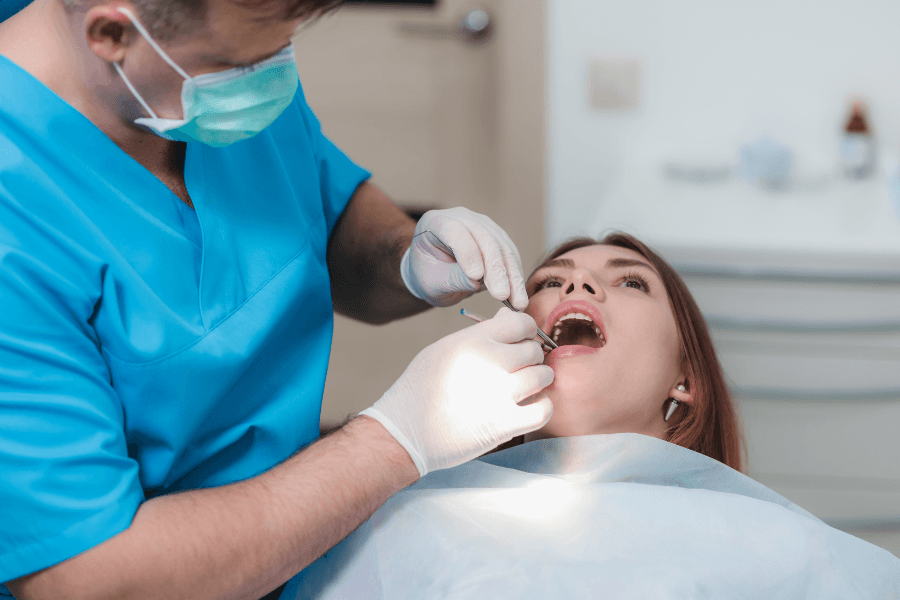
Leakage should not be assessed by appearance alone
Patients often associate leakage only with a dark line around a restoration. However, color changes do not always mean that caries is present, just as a restoration that appears normal may still require a more detailed analysis.
Diagnosis depends on a combination of clinical examination, the history of the tooth, the characteristics of the restoration, symptoms, specific tests, and, when necessary, complementary examinations.
For this reason, it is not advisable to conclude from appearance alone that a restoration must be replaced. Unnecessary replacements may remove healthy dental tissue and progressively increase the size of the restoration.
A careful evaluation makes it possible to distinguish superficial changes from defects that truly compromise the protection and stability of the tooth. This level of precision is part of a more conservative approach to dentistry.
Tooth wear may occur without the patient noticing
Tooth wear may also progress silently. In some patients, it is related to repeated contact between the teeth, as occurs with clenching and bruxism. In others, it may be associated with acidic substances in the diet, reflux, traumatic brushing, or a combination of different factors.
At first, the changes may be subtle. Slight flattening, loss of texture, thinner edges, or changes in enamel shine are not always noticeable in the mirror. Over time, however, wear may affect tooth shape, bite, sensitivity, and aesthetics.
During the check-up, these characteristics can be compared, habits can be investigated, and progression can be assessed. Clinical photographs, scans, and previous records may assist with this monitoring when indicated.
More important than simply recognizing that wear exists is understanding why it is happening. Without identifying the cause, any repair may once again be exposed to the same process.
Small changes in the gums also deserve attention
Gum health should not be evaluated only when pain is present. Gingival inflammation, bleeding, recession, and changes in contour may develop gradually and do not always cause discomfort.
Bleeding during brushing, for example, should not be considered normal. It may indicate inflammation and the need to improve biofilm control, review hygiene techniques, or investigate periodontal conditions.
Gingival recession may also progress discreetly. When part of the root becomes exposed, sensitivity, difficulty cleaning, and changes in the appearance of the smile may occur.
During the check-up, the gums are observed as an essential part of both health and aesthetics. We assess color, texture, the presence of bleeding, recession, biofilm accumulation, and the relationship between the gingival tissue, teeth, and restorations.
Because there is no truly beautiful smile when the tissues supporting it are not healthy.
Prevention also means protecting the beauty of your smile
Prevention is often associated only with avoiding disease. But it is also directly connected with preserving aesthetics.
When caries is identified early, there is a greater possibility of preserving dental structure. When a restoration is properly monitored, it may be possible to avoid extensive replacement. When wear is recognized in its early stages, there are more opportunities to control its progression. And when gingival health is maintained, we preserve the contour that frames the teeth.
This means that aesthetic care does not necessarily begin with whitening, a restoration, or another procedure. It begins with maintaining health.
A beautiful smile over time is the result of follow-up care, appropriate habits, and decisions made at the right moment.
What is evaluated during a dental check-up?
The check-up is personalized according to each patient’s history, age, habits, previous treatments, and risk factors. During the consultation, different aspects may be analyzed.
The evaluation includes the condition of the teeth, the presence of caries or early changes, the integrity of restorations, gum health, signs of wear, sensitivity, recession, the quality of oral hygiene, and the relationship between the teeth during the bite.
Habits such as clenching, bruxism, frequent consumption of acidic foods, smoking, and changes in routine that influence oral health may also be observed.
In addition, the lips, tongue, cheeks, and other structures of the mouth are part of the examination. A preventive consultation should not focus only on an isolated tooth, but on the whole.
When there is a clinical indication, imaging exams may complement the evaluation and help visualize areas that are not fully accessible through direct examination.
Imaging exams do not need to be performed automatically
Radiographs and other imaging exams are important resources, but their indication should be connected to the clinical needs of each patient. There is no rule stating that everyone should undergo the same exams at fixed intervals.
The decision considers the patient’s caries history, the presence of restorations, symptoms, periodontal condition, previous treatments, age, and findings from the clinical examination.
In some cases, a radiograph can help identify changes between the teeth, evaluate bone structures, monitor treatments, or examine regions that cannot be seen directly. In others, the clinical examination and existing records may be sufficient at that moment.
The goal is not to request exams as a matter of routine, but to use the information needed to reach a more precise diagnosis and plan care safely.
How often should a check-up be performed?
The frequency of dental check-ups does not need to be the same for everyone. The ideal interval depends on the risks and needs of each patient.
People with a frequent history of caries, periodontal disease, multiple restorations, implants, orthodontic appliances, bruxism, or conditions that make oral hygiene more difficult may require closer follow-up. Patients with good clinical stability and low risk may receive a different schedule.
For this reason, the recommendation to return every six months should not be treated as a universal rule. For some people, this interval may be appropriate. For others, it may need to be shortened or extended.
What matters most is having a follow-up plan defined by the dental professional after evaluating the individual case.
Preventive consultations make it possible to compare changes over time
One of the greatest benefits of periodic follow-up is the possibility of comparison. A small change may not seem important when observed in isolation, but it may take on a different meaning when compared with photographs, radiographs, scans, or notes from previous consultations.
This comparison helps determine whether tooth wear is progressing, whether gingival recession has increased, whether a restoration has remained stable, or whether an early lesion has changed in appearance.
Preventive dentistry does not depend only on finding a problem during one consultation. It also relies on observing how conditions evolve over time.
This follow-up provides greater confidence when deciding when to intervene and when only to monitor. It helps prevent both delays in necessary treatment and procedures performed before they are truly needed.
A check-up does not mean looking for something to treat
Some people avoid evaluation because they believe every consultation will result in a recommendation for a procedure. But a well-conducted check-up is not intended to create treatments. Its purpose is to understand the current state of oral health and define the necessary care.
In many cases, the consultation confirms that the teeth, gums, and restorations are stable. In this situation, guidance may focus on maintaining current habits and scheduling the next follow-up appointment.
In other cases, small changes may be identified that do not yet require immediate intervention but need to be observed. And when treatment is indicated, early diagnosis tends to favor more conservative approaches.
Prevention does not mean treating in advance. It means monitoring carefully so that action is taken only when it is truly necessary.
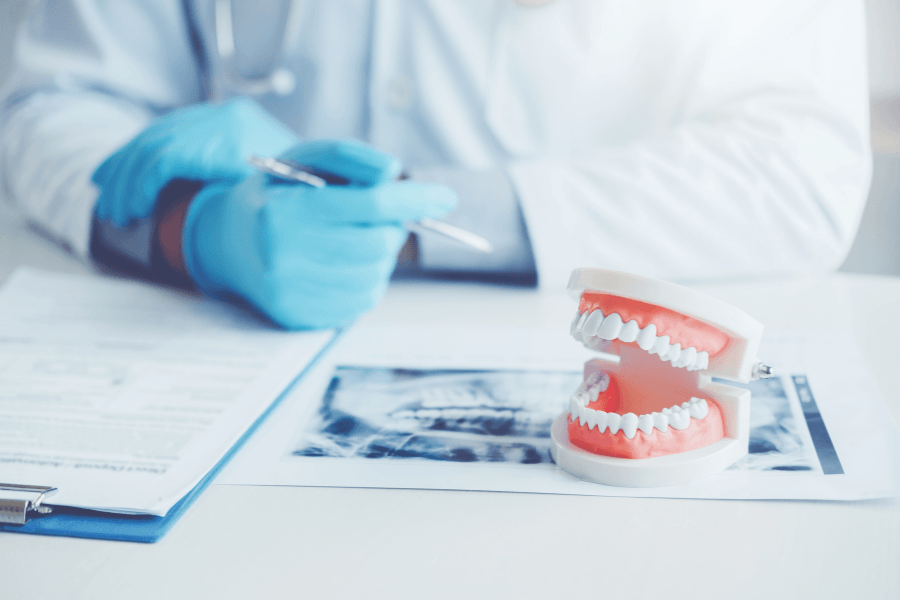
Taking care early is usually simpler than treating later
When a change is discovered early, there is a greater chance of preserving tissues, reducing the extent of treatment, and making the entire process more comfortable for the patient.
A small lesion may allow for a conservative approach. Early gingival inflammation may respond to changes in hygiene and follow-up. Mild wear can be monitored while its causes are controlled. A restoration with a localized change may, in certain cases, be repaired without being completely replaced.
When the problem progresses without monitoring, the possible solutions may become more complex. Treatment may require greater intervention, more stages, and a longer period of recovery and adaptation.
For this reason, having a check-up even without pain is not excessive care. It is an intelligent way to protect health and preserve more treatment options.
Have your check-up before pain appears
You do not need to wait until you feel pain to take care of your smile. Many changes begin silently, and a dental check-up makes it possible to identify them before they cause greater harm to health, function, or aesthetics.
At Clínica Debora Ayala, the evaluation is carried out individually, taking into account the teeth, gums, restorations, bite, habits, and clinical history. The goal is not to look for procedures, but to understand what your smile needs to remain healthy, functional, and beautiful over time.
Get in touch and schedule your personalized evaluation with Dr. Debora Ayala. Taking care early can make the entire path simpler, more conservative, and safer.
Dr. Debora Ayala – CRO 41.974/SP
Sources:
Oliveira, B. E. C. et al. Clinical success of infiltrant and resin sealant on incipient caries of permanent teeth: an integrative review of literature. Revista Gaúcha de Odontologia. Available at: https://www.scielo.br/j/rgo/a/Nt3LGkZNbxqKgB8DCtMwjLN/. Accessed on: Jul. 24, 2026.
Collares, K. et al. Should my composite restorations last forever? Why are they failing? Brazilian Oral Research. Available at: https://www.scielo.br/j/bor/a/PZHJKNdNrQLkqkShNFmvybt/. Accessed on: Jul. 24, 2026.
Marginal adaptation of direct and indirect restorations through digital radiographs: literature review. Revista Gaúcha de Odontologia. Available at: https://www.scielo.br/j/rgo/a/KfdX6HFJhQgRXRBhxYMSKFx/. Accessed on: Jul. 24, 2026.
British Dental Journal. The crucial early diagnosis of tooth wear. BDJ Team. Available at: https://www.nature.com/documents/BDJ_Team_January_2015.pdf. Accessed on: Jul. 24, 2026.
Dental Tribune International. Detecting dental caries: Is there anything new? Available at: https://www.dental-tribune.com/news/detecting-dental-caries-is-there-anything-new/. Accessed on: Jul. 24, 2026.
Dental Tribune International. ADA updates guidance on appropriate use of dental imaging. Available at: https://www.dental-tribune.com/news/ada-updates-guidance-on-appropriate-use-of-dental-imaging/. Accessed on: Jul. 24, 2026.
Dental Tribune International. Study uses artificial intelligence for gingivitis detection. Available at: https://asean.dental-tribune.com/news/study-uses-artificial-intelligence-for-gingivitis-detection/. Accessed on: Jul. 24, 2026.
Read Also
