
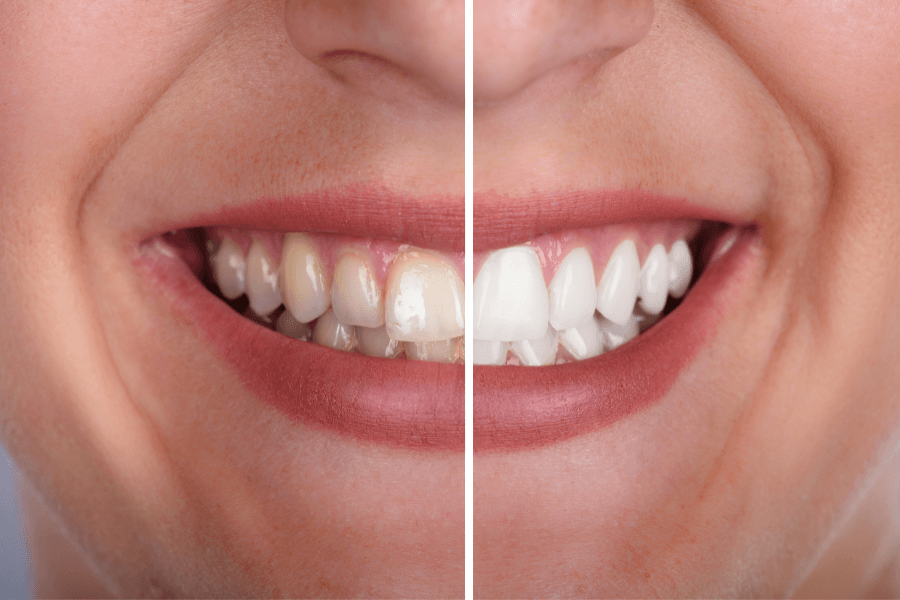
How to preserve color after teeth whitening and keep your smile bright for longer
Having your teeth whitened is often a turning point in your relationship with the mirror. Your smile gains brightness, lightness and harmony, and this directly impacts how you present yourself to the world. But from a clinical perspective, it’s important to be clear about one thing: whitening your teeth is the beginning of the process, not the end.
The shade you achieve after treatment is not static. It is influenced, day after day, by what you eat and drink, by how you brush your teeth, by the quality of your sleep, by your clenching habits and even by your saliva flow. Studies show that, with good care, the results of teeth whitening can remain stable for 1 to 2.5 years in many patients, and in some cases up to 3 years – but this varies greatly according to individual habits.
More than chasing the promise of “eternal whitening,” the goal is to understand how color maintenance of teeth works and what you can actually do to preserve the result in a conscious way.
Teeth whitening and color stability: what really happens inside the tooth
During teeth whitening, agents such as hydrogen peroxide or carbamide peroxide penetrate the structure of enamel and dentin and break down pigment molecules into smaller, less colored particles. What studies show is that, after treatment, there is a stabilization period: part of the whitening is immediate, and another part continues to adjust in the first 24–48 hours, with a small natural “rebound” tendency (the color shifts back slightly to a new equilibrium shade).
This does not mean the treatment “didn’t work,” but that the tooth is finding a new stability point. From that moment on, the variables each patient brings to the table start to act: diet, pigment consumption, oral hygiene, saliva flow, smoking, bruxism, quality of restorations and so on. In practice, it is this combination that defines how long the teeth whitening result will remain satisfactory.
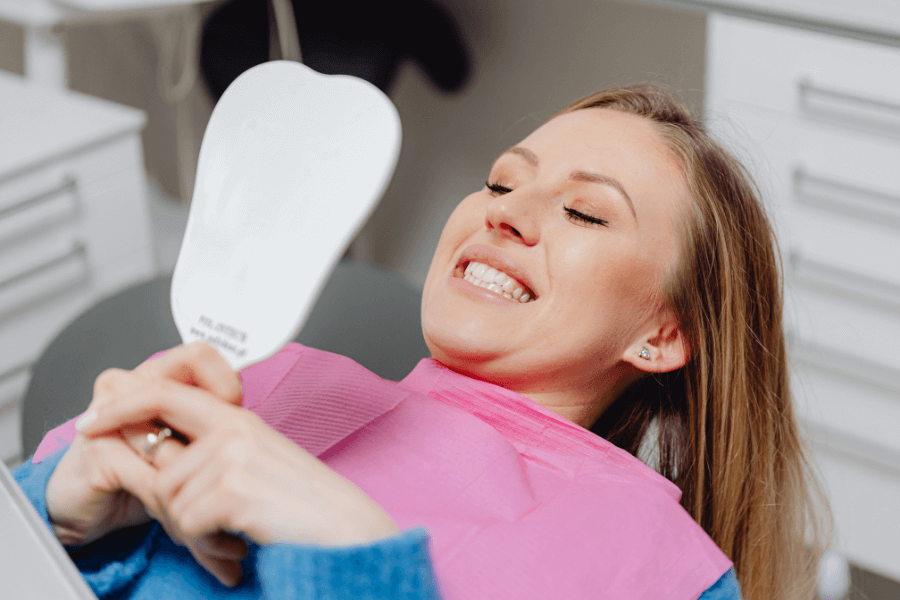
Why do teeth get stained again over time?
The stains that appear after teeth whitening can have an external origin (on the tooth surface) or internal origin (related to dentin and metabolic or aging processes). In everyday life, extrinsic pigmentation is the most frequent.
Beverages such as coffee, dark teas, red wine and cola-based soft drinks, as well as tobacco, are among the main factors that change the color of the smile over time. In laboratory settings, it is known that coffee, wine and soft drinks can adhere to enamel, especially when there are surface roughness, dental plaque or microcracks.
On the other hand, more recent studies indicate that under certain conditions coffee alone does not interfere with color results as much as once imagined, while drinks like red wine and cola-based soft drinks seem to have a more significant staining potential.
This reinforces an important point: it’s not about living on a permanent “white diet,” but about understanding that color maintenance of teeth is the result of multiple factors. The more frequent and concentrated the exposure to pigments, the greater the chance that the smile will darken over the months.
The first 48 hours: a truly critical period
Right after teeth whitening, enamel becomes temporarily more permeable, and the tooth surface is at a moment of greater sensitivity both to thermal stimuli and pigments. That’s why many clinical protocols and recommendations from dental associations emphasize specific care in the first 24–48 hours.
During this period, it is common to recommend:
- avoiding very pigmented drinks, such as red wine, dark teas and cola-based soft drinks;
- avoiding cigarettes and other tobacco products;
- preferring a more neutral diet in terms of color and acidity, following, in some cases, a temporary “white diet.”
After this more critical window, teeth tend to gradually return to a pattern of greater resistance to pigmentation. Even so, the better the hygiene, plaque control and attention to excesses, the slower the loss of brightness from teeth whitening will be.
Temperature, microcracks and clenching: what doesn’t show in photos, but changes color
Not everything that interferes with color maintenance of teeth is obvious. Very intense temperature variations (repeatedly drinking something very hot right after something very cold) generate microexpansions and microcontractions in dental structure. In teeth with microcracks, thinner enamel or wear history, this can facilitate both sensitivity and pigment retention in specific areas.
Another relevant factor is bruxism (clenching or grinding teeth, while awake or asleep). Patients with bruxism often show:
- more intense wear of incisal edges;
- dentin exposure;
- small cracks and stress lines, especially in incisors and premolars.
Because these areas are more fragile or porous, they tend to lose the brightness of teeth whitening more quickly and accumulate pigments more easily. In such cases, treating bruxism (with a night guard, occlusal adjustment and a multidisciplinary approach when needed) is part of the color care plan, not just pain management.
Do whitening toothpastes really help maintain the result?
Toothpastes marketed as “whitening” can be coadjuvants in color maintenance of teeth, especially because they help control biofilm and superficial stains. Many products combine abrasives at specific concentrations with mild chemical agents, designed to clean the surface without replacing professional teeth whitening.
The key here is not to turn the toothpaste into the protagonist of the story. Highly abrasive toothpastes used without criteria can wear down enamel, increase sensitivity and create more porous surfaces, which actually stain more easily.
Choosing the ideal toothpaste should consider the overall picture: caries risk, presence of sensitivity, gingival condition, type of restorations and frequency of pigment intake. Toothpaste helps, but what truly determines color longevity is the combination of a well-planned professional protocol and daily behavior.
How to turn whitening into a long-lasting result
For teeth whitening to translate into a beautiful and healthy smile for longer, it is helpful to see the result as something that needs to be “cultivated.” Instead of rigid lists of prohibitions, the focus is on repeated decisions, month after month, that protect the investment made in your health and aesthetics.
Some attitudes make a real difference:
- maintaining meticulous oral hygiene, with careful brushing and daily interdental cleaning;
- paying attention to the frequency and amount of highly pigmented drinks, adjusting portions and pairing them, whenever possible, with a water rinse;
- avoiding tobacco in all forms, for both its staining effect and its broad impact on oral and systemic health;
- respecting the recommended interval between professional cleanings, which help remove extrinsic stains before they become more resistant;
- talking to your dentist about symptoms of clenching, muscle pain or wear, to evaluate whether additional protection for whitened teeth is needed.
When these elements work together, color maintenance of teeth stops being an abstract promise and becomes a natural consequence of your routine.
Touch-ups, maintenance and when to reassess whitening
Even with all the care in the world, it is expected that your smile’s shade will change over the years. Systematic reviews show that, on average, teeth whitening results tend to remain stable for periods ranging from about 6 months up to 2–3 years, depending on the technique used, each patient’s biology and lifestyle habits.
That doesn’t mean you’ve “lost” the whitening after that time. In many cases, small supervised touch-ups, in shorter cycles and with appropriate concentrations, are enough to recover brightness and shade balance, without needing to repeat the entire initial protocol.
The right time to reassess is not determined by the calendar, but by a combination of:
- your own perception in the mirror;
- the clinical analysis by the dental team;
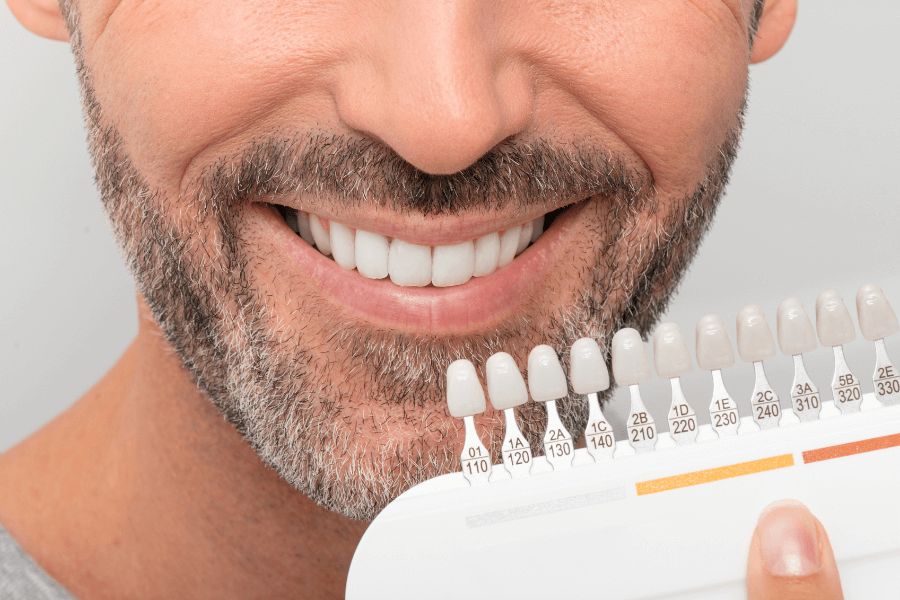
- comparison with shade records taken before and after the first treatment.
This joint assessment allows you to define whether it is time for a good professional cleaning, habit adjustments or a new teeth whitening cycle.
Take care of your whitened smile at Clínica Debora Ayala
Seeing teeth whitening as a starting point – not a finish line – is a mature way of taking care of yourself. The color of your smile is not just aesthetics: it speaks about habits, gingival health, tooth structure and the choices you make for your future.
At Clínica Debora Ayala, each whitening case is planned considering the full context: stain history, enamel type, presence of restorations, sensitivity risks, eating habits, signs of bruxism and long-term expectations. After treatment, follow-up includes personalized guidance on color maintenance of teeth, periodic check-ups and, when necessary, carefully indicated touch-up protocols.
If you have already undergone teeth whitening and want to preserve the result safely, or if you’re thinking of whitening your teeth for the first time, get in touch and schedule a personalized consultation. Together, we’ll build a care plan that respects your tooth biology, values your investment and keeps your smile bright for longer.
Dr. Debora Ayala – CRO 41.974/SP
Sources:
Fioresta, R. et al. Prognosis in home dental bleaching: a systematic review. Clinical Oral Investigations. Available at: https://link.springer.com/article/10.1007/s00784-023-05069-0. Accessed on: Feb. 18, 2026.
Câmara, J. V. F. et al. Effect of tooth enamel staining by coffee consumption during at-home tooth bleaching with carbamide peroxide. Revista de Odontologia da UNESP. Available at: https://revodontolunesp.com.br/article/doi/10.1590/1807-2577.02420. Accessed on: Feb. 18, 2026.
Thakkar, R. N. et al. Effect of staining beverages on color stability of composite: a spectrophotometric study. Journal of International Society of Preventive & Community Dentistry (PMC). Available at: https://www.ncbi.nlm.nih.gov/pmc/articles/PMC4158256/. Accessed on: Feb. 18, 2026.
Poggio, C. et al. Color stability of esthetic restorative materials: a spectrophotometric analysis. Acta Biomaterialia Odontologica Scandinavica (PMC). Available at: https://www.ncbi.nlm.nih.gov/pmc/articles/PMC4768795/. Accessed on: Feb. 18, 2026.
Silva, T. P. et al. Influence of whitening toothpaste on color, roughness, and microhardness of composite resins. European Journal of General Dentistry / Repositório UNESP. Available at: https://repositorio.unesp.br/items/1f0d5e91-8c58-4f3b-8a96-277255962200. Accessed on: Feb. 18, 2026.
Shamel, M. et al. Influence of different types of whitening tooth pastes on the tooth color, enamel surface roughness and enamel morphology of human teeth. Journal of Dentistry. Available at: https://pubmed.ncbi.nlm.nih.gov/31839926/. Accessed on: Feb. 18, 2026.
Research, Society and Development. Article on conditioning with hydrofluoric acid in glass ceramics and formation of superficial microcracks. Available at: https://rsdjournal.org/index.php/rsd/article/download/24776/21513/290269. Accessed on: Feb. 18, 2026.
Pupo, Y. M. et al. Diagnosis, oral rehabilitation and multidisciplinary management of severe tooth wear caused by bruxism. Brazilian Journal of Health Review. Available at: https://ojs.brazilianjournals.com.br/ojs/index.php/BJHR/article/view/22458. Accessed on: Feb. 18, 2026.
Robinson & Malone Dentistry. How long does professional teeth whitening last? Available at: https://www.robinsondds.com/how-long-does-professional-teeth-whitening-last/. Accessed on: Feb. 18, 2026.
Center of Dental Services. 6 Common mistakes to avoid after teeth whitening in Linden. Available at: https://www.centerofdentalservices.com/6-common-mistakes-to-avoid-after-teeth-whitening-in-linden. Accessed on: Feb. 18, 2026.
Read Also:
