
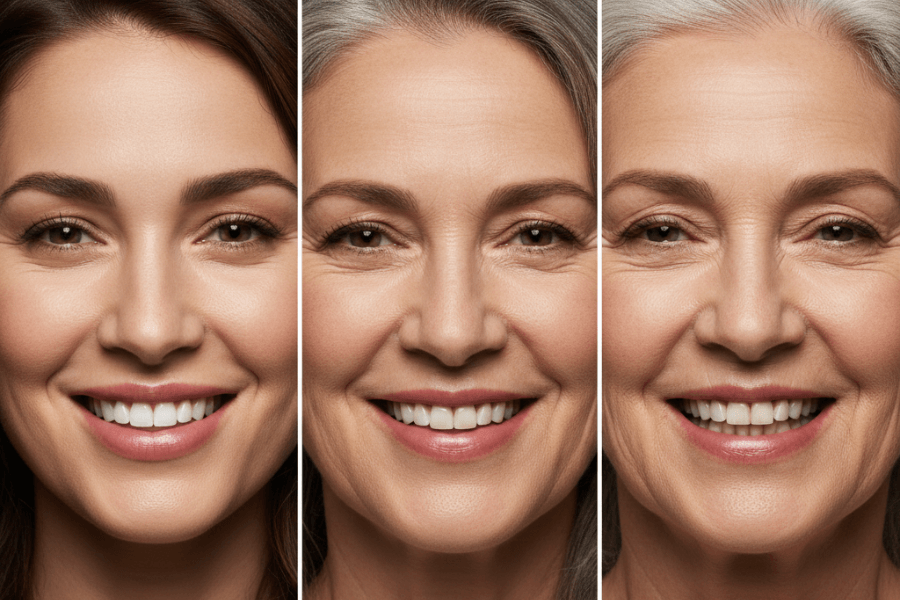
Smile aging and how it impacts much more than aesthetics
When we think about aging, we usually remember the skin, hair and the marks that time leaves on the body. But there is one aspect that often goes unnoticed – and that says a lot about our story: smile aging. Just like the rest of the body, teeth, gums and supporting structures also change over the years, and these transformations can affect not only aesthetics, but also function, overall health and even the shape of the face.
Understanding how this process happens is essential to take care of the mouth strategically, prevent problems and use, in favor of the patient, all the resources that modern dentistry offers to keep the smile healthy, harmonious and functional at every stage of life.
What is smile aging
Smile aging is the set of natural changes (or changes accelerated by habits and diseases) that affect teeth, gums, bones and muscles over time. It is not just about “more yellow teeth”, but about a broader process that involves:
- Wear of the dental structure;
- Changes in tooth color;
- Gum recession;
- Bone loss;
- Changes in the bite;
- Changes in lip support and facial contour.
These transformations can occur subtly, almost imperceptibly, or in a more evident way, depending on genetics, hygiene habits, diet, the presence of systemic diseases, parafunctions (such as bruxism) and the patient’s dental treatment history.
The good news is that aging is not synonymous with losing the vitality of your smile. With appropriate follow-up and individualized planning, it is possible to age while maintaining function, comfort and aesthetics.

How teeth change over time
Teeth are in constant use: every day we chew, speak, smile, clench and grind them (often without realizing it). As the years go by, this naturally leads to wear. In many patients, this process is intensified by habits such as:
- Grinding or clenching the teeth (bruxism);
- Biting nails, pen caps or other objects;
- Chewing in an unbalanced way;
- A diet rich in acidic foods (soft drinks, excessive citrus fruits, energy drinks).
Over time, smile aging may show up as:
- Loss of tooth height (teeth become shorter);
- Worn or chipped edges;
- Microcracks on the surface;
- Loss of enamel shine;
- Sensitivity to cold, heat or sweets.
In addition, teeth may become darker over the years. This happens both due to external pigments (such as coffee, wine, smoking, dark teas) and internal changes in the tooth structure, which naturally make the tooth more yellow or grayish.
Taken together, these changes can visually convey an impression of tiredness, aging and, in some cases, neglect – even in people who take great care of their health in other areas.
Gums, bones and the impact on facial shape
It is not only the teeth that age. The gums and the bones that support the teeth also undergo important changes over time. In many cases, the patient notices:
- Gum recession (when the gum “goes up” or “goes down”, exposing part of the root);
- Greater sensitivity in the area close to the gum;
- The appearance of longer teeth;
- Spaces between teeth that did not exist before.
Gum recession can have several causes, such as inflammation (periodontal disease), very abrasive brushing, occlusal trauma (unbalanced bite), misaligned teeth, bruxism, among others. Regardless of the cause, it contributes to an aged appearance of the smile and can compromise dental health and stability in the long term.
Bone loss – often associated with periodontal disease or tooth loss – can deeply affect the support of the lips and the lower part of the face. With less bone support and fewer teeth, the perioral region tends to “collapse”, favoring the appearance of lines, wrinkles around the mouth and the feeling that the face is “sagging”.
In other words, smile aging is not limited to the mouth: it directly affects how the face is structured and how the patient sees themselves and is seen by others.
Warning signs you should not ignore
Some signs are typical of a smile that is aging faster than it should or without proper care, and they deserve specialized dental attention:
- Frequent gum bleeding when brushing or flossing;
- Teeth that look shorter or longer than before;
- Teeth with worn or chipped edges;
- Sensitivity that did not exist before;
- Changes in tooth color, even with good hygiene;
- Tooth loss or the sensation that teeth have become “loose”;
- Old, uncomfortable or aesthetically unsatisfactory dentures;
- Changes in the bite or difficulty chewing certain foods.
These signs may indicate anything from natural wear to established diseases such as periodontitis, fractures, carious lesions or significant occlusal problems. The earlier they are identified and treated, the greater the chances of preserving structures and avoiding more complex treatments in the future.
What modern dentistry can do for smile aging
Contemporary dentistry has sophisticated resources to care for smile aging, combining science, technology and aesthetics in an integrated way. The goal is not to “erase age”, but to restore comfort, health and harmony to the smile, respecting each patient’s individuality.
Among the treatment possibilities, always assessed on a case-by-case basis, are:
- Prevention and maintenance protocols: Periodic professional cleaning, plaque control, personalized hygiene guidance, appropriate use of toothbrushes, toothpaste and dental floss, as well as continuous monitoring of gum and bone health;
- Periodontal treatments: Control of gum inflammation and infections, treatment of periodontal pockets, maintenance therapies for supporting tissues and, in some cases, regenerative procedures;
- Functional and aesthetic rehabilitation: Restorations, ceramic veneers and laminates, crowns, onlays, treatments for wear and fractures, always focusing on preserving tooth structure, bite function and smile harmony;
- Well-planned implants and prostheses: When there is tooth loss, planning with implants and suitable prostheses restores support, efficient chewing and aesthetics, helping to rebalance the smile and facial contour;
- Bruxism treatment and occlusal adjustments: Bite splints, fine occlusal adjustments and continuous follow-up help reduce future wear, muscle pain and overload on the joints;
- Teeth whitening, when indicated: In selected cases, professionally supervised whitening can restore brightness and freshness to the smile, while respecting enamel and gum health.
At Clínica Debora Ayala, all these resources are assessed within an integrated vision, considering not only each tooth in isolation, but how the smile fits the face, the patient’s daily routine and their health history.
Take care of your smile at every stage of life at Clínica Debora Ayala
Accepting that time passes does not mean giving up a healthy, functional and harmonious smile. Recognizing smile aging is the first step toward acting preventively and strategically, avoiding greater losses in the future and valuing your quality of life in the present.
If you have noticed changes in color, shape, sensitivity, gums or in the way your teeth fit together, this is the ideal moment for a specialized evaluation. At Clínica Debora Ayala, every patient is welcomed with an integral view of oral health, aesthetics and longevity, with personalized treatment plans aligned with their needs and goals.
Get in touch and schedule an appointment with our team, and discover how modern dentistry can take care of your smile today while thinking about your tomorrow.
👩⚕️ Dr. Debora Ayala – CRO 41.974/SP
Read Also
