
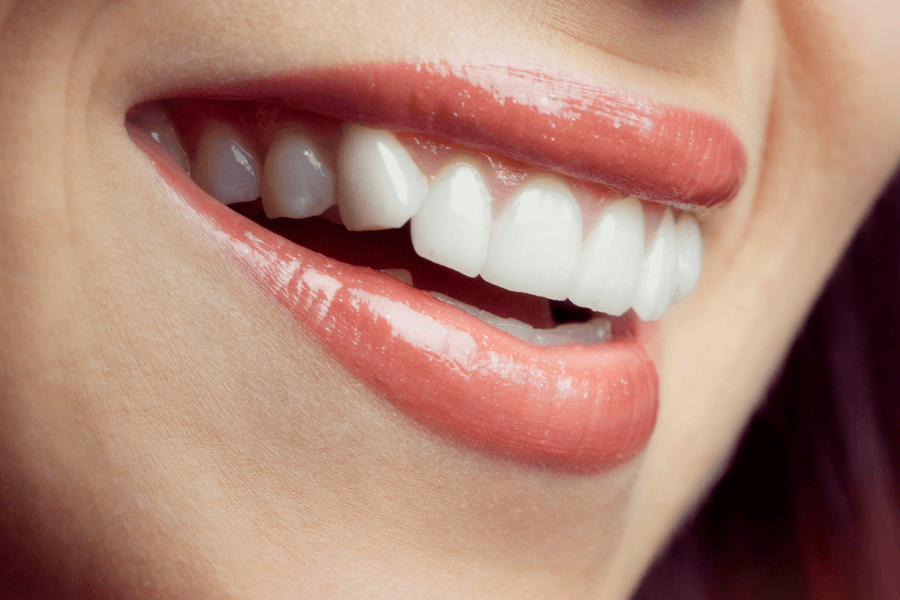
Have you ever stopped to think about the strength of your smile?
When we talk about a smile, we almost always think of aesthetics first. But before it is beautiful, the smile is strong. Each tooth is a living, highly specialized structure, connected to the rest of the body and designed to withstand impressive forces every day – chewing, grinding, guiding jaw movements and participating in speech.
From a biological point of view, a tooth integrates enamel, dentin, pulp, periodontal ligament, bone and masticatory muscles in a highly precise system. This set needs to be in balance so that you can bite safely, eat well, speak clearly and maintain both oral and systemic health.
More than just “beautiful teeth,” taking care of your smile means protecting a complex functional structure that is constantly interacting with the rest of the body.
Dental enamel: the hardest tissue in the body and one that does not regenerate
Dental enamel is the outermost layer of the tooth and, at the same time, its first line of defense. It is composed of around 96% mineral (mainly hydroxyapatite crystals), which makes it the hardest tissue in the human body, with hardness values in the range of 3 to 5 GPa, significantly higher than the dentin beneath it.
This rigidity is essential to withstand daily chewing. But there is a critical point: once formed, enamel does not regenerate. It does not have cells capable of rebuilding large areas that have been lost. Small demineralization processes can be reversed with good hygiene and fluoride (the so-called superficial remineralization), but more extensive fractures and wear are permanent and must be restored with dental materials.
Taking care of enamel, therefore, means protecting the tooth’s “shield.” When this shield is broken, dentin and pulp become more vulnerable, and this can mean sensitivity, pain and structural loss over time.
The forces your smile withstands every day
In everyday life, your teeth do not “work lightly.” Studies show that human bite force can reach hundreds of Newtons in healthy adults, with average values varying by age, sex and region of the mouth, and maximum forces in molars exceeding 500 N in clinical studies and even 1,100–1,300 N in biomechanical models.
These forces are produced by the masticatory muscles (masseter, temporalis, pterygoids) and distributed through the teeth, periodontal ligaments and bone. The periodontal ligament works like a “biological spring,” cushioning impacts and allowing micromovements that protect the root and alveolar bone.
When everything is in balance – well-positioned teeth, adequate occlusal contacts, healthy musculature – this force is an ally: you chew well, grind food efficiently, protect the digestive system and support overall health. When there are imbalances, the same force starts acting destructively, causing wear, cracks, muscle pain and joint overload.

From enamel to pulp: each layer has its function
A healthy tooth is made up of different tissues, each with a specific role.
Enamel, as we have seen, is the highly mineralized outer layer that protects the tooth from the oral environment, temperature changes and chewing forces. Beneath it is dentin, which is less hard and more elastic, with tubules that connect to the pulp and explain sensitivity when enamel is worn down. In the center, the pulp houses blood vessels and nerves, responsible for nutrition, defense and pain perception. Around the root, cementum and the periodontal ligament connect the tooth to the bone, allowing it to withstand force without simply “cracking like glass.”
When we think about the “strength of the smile,” we need to see this whole set: it is not enough to have beautiful enamel if dentin is compromised by decay, if the pulp is inflamed or if the periodontal ligament is being attacked by chronic gingival inflammation.
When strength becomes damage: bite imbalances, wear and cracks
The same capacity to withstand heavy loads that makes the smile functional can, in some situations, become a risk factor. This happens, for example, when there is:
- clenching or bruxism (while awake or asleep);
- misaligned teeth, with premature contacts;
- poorly adapted restorations that change the shape of the bite;
- loss of one or more teeth, redistributing the load onto a few remaining elements.
In these scenarios, forces that should be well distributed start to concentrate in specific regions. The result can be a set of microcracks in enamel, loss of cusp height, dentin exposure and overload in muscles and joints. Clinically, this manifests as teeth that chip easily, sensitivity to cold, discomfort when chewing and even chronic orofacial pain.
That is why, when we assess the “strength of your smile,” we look not only at tooth anatomy but at the whole occlusion–musculature–habits complex. A strong smile is one that withstands everyday demands without needing to “break” to keep up.
The strength of the smile and the strength of the body: the connection with systemic health
Today, science is quite clear on one point: oral health and systemic health go hand in hand. Chronic inflammations in the mouth, such as periodontal disease, have already been associated with a higher risk of cardiovascular diseases, poorer glycemic control in people with diabetes, pregnancy complications and an impact on other chronic conditions.
Recent studies reinforce that treating silent dental infections – such as chronic lesions at the tip of the root that require root canal treatment – can improve inflammatory markers, fat metabolism and glycemic control in patients who are followed over time. This shows that we are not just dealing with “a single tooth,” but with an infectious focus that communicates with the entire body.
In practice, this means that preserving the integrity of enamel, dentin, pulp and supporting tissues is not just a local care measure. It is a way to reduce inflammatory burden, protect the cardiovascular system, support diabetes control and sustain health as a whole.
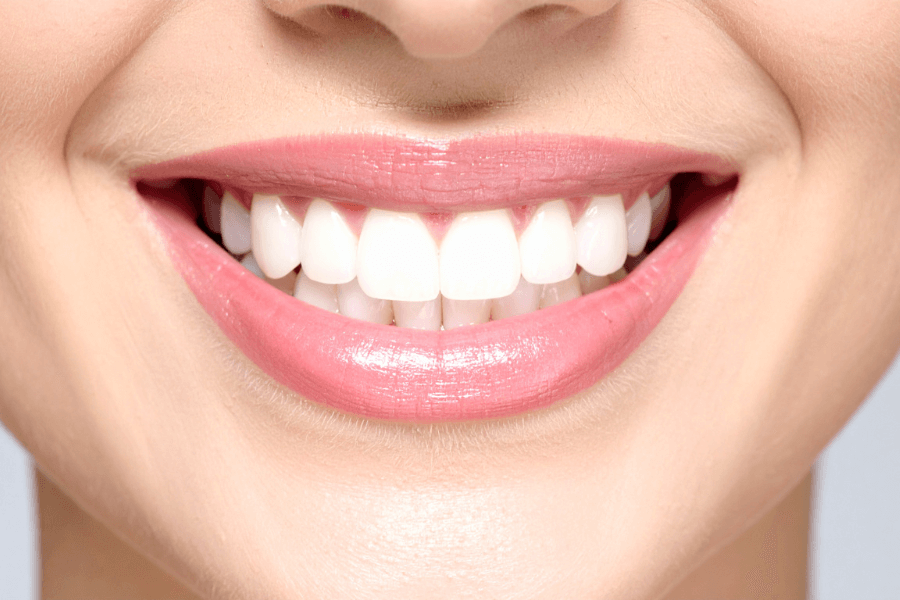
Preventive check-ups: how to protect the strength of your smile throughout life
The best way to respect the strength of your smile is not to wait for it to break before you start caring for it. Preventive and regular follow-up dentistry makes it possible to identify:
small cracks before they become catastrophic fractures;
early wear areas associated with bruxism or occlusal imbalance;
initial signs of gingival and bone disease;
leakage in restorations that compromise the internal structure of the tooth.
Scheduled check-ups, combined with professional prophylaxis and risk-factor control, help keep teeth, gums and supporting structures in balance – which translates into more functional strength, fewer emergencies and greater quality of life over the years.
In other words: your smile is strong, but it is not indestructible. It needs to be cared for just as you would care for an important joint, a heart you want to keep healthy or a body you want to stay active for a long time.
Take care of the strength of your smile at Clínica Debora Ayala
When we ask, “Have you ever stopped to think about the strength of your smile?”, we are going beyond aesthetics. We are talking about how you chew, how your teeth relate to your muscles, how your gums support your health and how all of this impacts your entire body.
At Clínica Debora Ayala, the assessment is not limited to an isolated tooth. We observe the whole: structure, function, occlusal balance, signs of overload, gingival health and systemic context. From there, we design a care plan that may range from fine contact adjustments, habit guidance and preventive protocols to more comprehensive rehabilitations when needed.
If it has been a while since your last preventive check-up, this is an excellent time to look at your smile not just as something beautiful, but as a powerful structure that deserves protection.
Get in touch and schedule your personalized consultation. Together, we’ll assess the strength of your smile today and what we can do to keep it healthy, functional and present in every stage of your life.
Dr. Debora Ayala – CRO 41.974/SP
Sources:
Farci, F. et al. Histology, Tooth. StatPearls Publishing. Available at: https://www.ncbi.nlm.nih.gov/books/NBK572055/. Accessed on: Feb. 18, 2026.
Dentalcare. Divisions and Components of the Teeth. Available at: https://www.dentalcare.com/en-us/ce-courses/ce500/divisions-and-components-of-the-teeth. Accessed on: Feb. 18, 2026.
MouthHealthy – American Dental Association. Tooth. Available at: https://www.mouthhealthy.org/all-topics-a-z/tooth. Accessed on: Feb. 18, 2026.
Kenhub. Anatomy of the tooth. Available at: https://www.kenhub.com/en/library/anatomy/anatomy-of-the-tooth. Accessed on: Feb. 18, 2026.
Encyclopedia MDPI. Tooth Diversity. Available at: https://encyclopedia.pub/entry/40745. Accessed on: Feb. 18, 2026.
Chun, K. J. et al. Comparison of mechanical property and role between enamel and dentin. Journal of Dental Biomechanics. Available at: https://www.ncbi.nlm.nih.gov/pmc/articles/PMC3924884/. Accessed on: Feb. 18, 2026.
Edmonds, H. M. et al. The ontogeny of maximum bite force in humans. American Journal of Physical Anthropology. Available at: https://www.ncbi.nlm.nih.gov/pmc/articles/PMC7476206/. Accessed on: Feb. 18, 2026.
National Geographic. Human jaws are surprisingly strong and efficient. Available at: https://www.nationalgeographic.com/science/article/who-are-you-calling-weak-human-jaws-are-surprisingly-strong-and-efficient. Accessed on: Feb. 18, 2026.
Weidlich, P. et al. Association between periodontal diseases and systemic diseases. Brazilian Oral Research. Available at: https://www.scielo.br/j/bor/a/SsD7R6Rh8yt7gZBqdNCvCzD/. Accessed on: Feb. 18, 2026.
Bida, F. C. et al. The Systemic Link Between Oral Health and Cardiovascular Disease. Available at: https://www.ncbi.nlm.nih.gov/pmc/articles/PMC12651253/. Accessed on: Feb. 18, 2026.
Natarajan, P. et al. Investigating the link between oral health conditions and systemic health. Scientific Reports. Available at: https://www.nature.com/articles/s41598-025-92523-6. Accessed on: Feb. 18, 2026.
Huh, Y. et al. Association of Dental Diseases and Oral Hygiene Care with Heart Failure in Type 2 Diabetes. Journal of the American Heart Association. Available at: https://www.ahajournals.org/doi/10.1161/JAHA.122.029207. Accessed on: Feb. 18, 2026.
Davenport, C. F. et al. The effectiveness of routine dental checks: a systematic review. British Dental Journal. Available at: https://pubmed.ncbi.nlm.nih.gov/12881749/. Accessed on: Feb. 18, 2026.
Panthueng, W. et al. Factors associated with utilization of preventive dental services among older people. Gerodontology. Available at: https://www.sciencedirect.com/science/article/pii/S221339842300221X. Accessed on: Feb. 18, 2026.
Read Also:
