
A smile that suits you: Why should aesthetics respect your identity?
Every smile carries a story. It reflects the way a person speaks, expresses themselves, reacts, shows confidence, and connects with the world. That is why transforming a smile should not mean erasing its characteristics and replacing them with a ready-made model.
In cosmetic dentistry, a truly beautiful result does not come from trying to reproduce someone else’s smile. It comes from understanding the person being cared for. Before thinking about color, alignment, shape, or proportion, it is essential to listen to the patient, understand what bothers them, learn about their expectations, and evaluate what truly makes sense for their face, health, and lifestyle.
At Clínica Debora Ayala, this listening is the first step in every treatment plan. It allows us to distinguish an authentic desire from a passing reference, understand which characteristics should be preserved, and identify which changes can bring greater lightness, balance, and confidence.
Because the smile that suits you best is not the one that follows a standard. It is the one that enhances your essence while still looking unmistakably like yours.
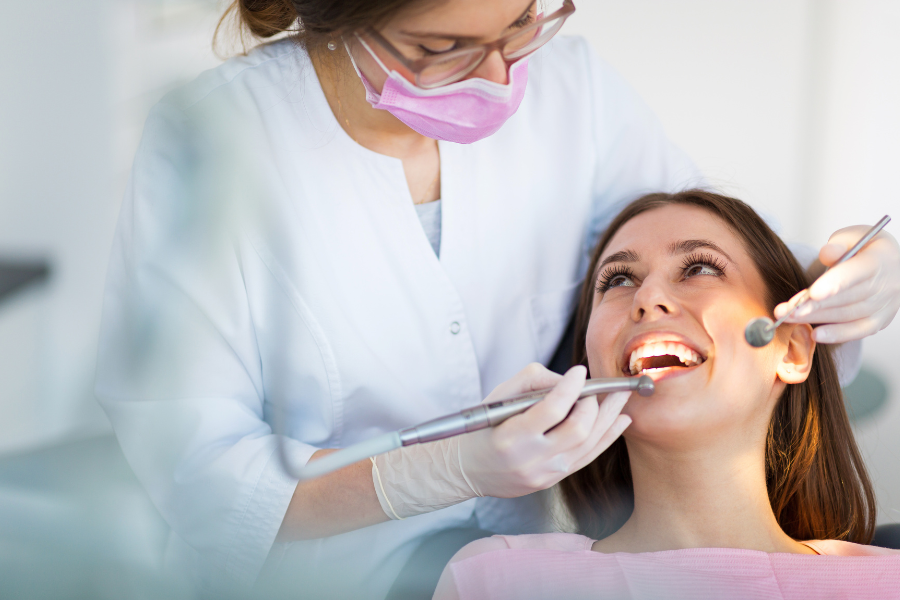
Before any transformation comes listening
An aesthetic consultation should not begin with the recommendation of a procedure. It begins with a conversation.
The patient needs space to explain what they notice about their own smile, how long a particular feature has bothered them, which changes they would like to see, and which results they would not want. Sometimes, the main concern is related to color. In other cases, it may involve shape, alignment, gingival display, an old restoration, or the feeling that the smile does not match the expression of the face.
It is also important to understand how that person sees themselves. Two patients with similar clinical characteristics may want completely different results. One may be looking for a very subtle change, while another may want a more noticeable transformation. Neither expectation should automatically be considered right or inappropriate. They need to be understood and analyzed in light of health, function, and the real possibilities of the case.
Listening allows the treatment to be built with the patient, not simply applied to them.
There is no ideal smile for everyone
The idea of a universally perfect smile overlooks one essential aspect of aesthetics: beauty depends on the relationship between different elements.
The shape of the teeth needs to connect with the face. The shade needs to work with the skin, lips, and age. Alignment needs to respect anatomy, bite, and bone structure. The gingival contour needs to be healthy and integrated with dental proportions. Even the amount of tooth displayed while smiling varies according to lip movement and each person’s expression.
This means that a feature considered beautiful in one patient may not create the same effect in another. Very long teeth may enhance one face but appear disproportionate in another. A brighter white may work in a specific context but create an artificial contrast in another. Likewise, a broader smile is not necessarily better for everyone.
Aesthetic planning needs to interpret the whole. When a single standard is applied indiscriminately, there is a risk of creating results that are technically well executed but visually disconnected from the patient.
A personalized smile does not mean following every trend
Aesthetic references are everywhere. Social media, filters, edited photographs, and celebrity images influence the way many people perceive their own smile. These references can help patients communicate their preferences, but they should not be turned into a design to be copied.
A photograph shows only part of reality. It does not fully reveal dental anatomy, enamel thickness, bite, jaw movements, gingival health, or the way that smile behaves during speech.
In addition, what looks natural on one person may look artificial on another. Copying someone else’s tooth shape, color, or proportions means ignoring all the differences between the two faces.
At Clínica Debora Ayala, the references brought by the patient are used as a starting point for conversation. They help us understand what catches their attention, but the treatment plan is built around the real characteristics of their own case.
Naturalness comes from coherence between smile and face
When a smile suits the patient, it does not look separate from the rest of the face. There is continuity between the teeth, lips, gums, facial shape, and the way that person expresses themselves.
This integration depends on different factors. The line formed by the edges of the upper teeth, for example, needs to be observed in relation to the movement of the lower lip. Tooth display changes during speech, at rest, and in a broad smile. The position of the midline needs to be interpreted within the face, without demanding mathematical symmetry that does not always exist naturally.
Age also influences this analysis. The way teeth are displayed, the position of the lips, and the amount of visible dental structure change over time. A treatment plan that ignores these changes may create a smile that does not match the patient’s expression or stage of life.
Naturalness does not mean leaving everything exactly as it is. It means making changes that remain coherent with the whole.
A beautiful shade does not mean extreme whiteness
Tooth color is one of the first elements noticed in a smile, but it should not be analyzed in isolation. Natural teeth have depth, translucency, brightness, and subtle variations across different areas.
When the only goal is to achieve the brightest white possible, these characteristics may be lost. The smile may become lighter, but also more uniform and less integrated with the patient’s natural appearance.
Shade selection needs to consider the initial color of the teeth, the expected response to whitening, the presence of restorations, veneers, or crowns, and the result the patient hopes to achieve. Not every structure in the mouth changes color in the same way, and this needs to be anticipated before treatment.
A brighter smile can be elegant and noticeable without looking excessive. The best shade is not necessarily the whitest one. It is the one that enhances the face and still looks natural.
Tooth shape also communicates identity
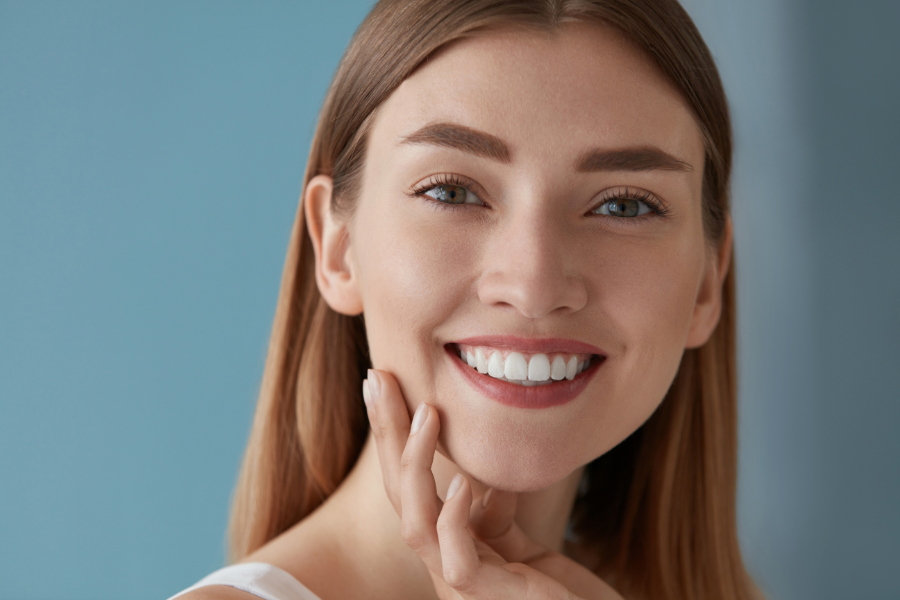
The shape of the teeth influences the visual personality of the smile. More rounded contours may create a different impression from straighter or more defined forms. Longer, shorter, wider, or narrower teeth also change the way the smile is perceived.
However, these associations should not be used as rigid formulas. The goal is not to choose a shape from a catalog, but to understand which design integrates best with the patient’s anatomy and expression.
Small natural characteristics can be important for maintaining authenticity. Slightly different edges, variations in texture, and soft asymmetries help prevent the teeth from looking like repeated pieces.
In certain cases, restorative adjustments can correct wear, fractures, or proportions that cause concern. In others, preserving the original shape is exactly what keeps the smile connected to the patient’s identity.
Alignment should respect aesthetics, function, and structure
An aligned smile can bring balance, make hygiene easier, and improve the distribution of forces. But alignment does not mean turning every tooth into an identical element.
Tooth position needs to be analyzed in relation to the bite, bone structure, gums, and jaw movements. When indicated, orthodontics can reposition the teeth while preserving their natural structure. In other situations, small restorative adjustments may be enough. There may also be cases in which different approaches need to be combined.
The best choice is not necessarily the fastest one. It is the one that resolves the patient’s needs with the least possible wear, while providing stability and respecting the biological conditions of the case.
A personalized smile does not simply seek a visually straight line. It seeks balance between appearance, health, and function.
The gums directly influence the result
The gums work as a frame around the teeth. Their contour influences the apparent proportion, continuity, and symmetry of the smile.
That is why, before any aesthetic transformation, it is essential to evaluate gingival health. Inflammation, bleeding, recession, increased volume, or contour differences can interfere with both appearance and treatment stability.
Greater gingival display can also have different causes. It may be related to gum position, the apparent size of the teeth, lip movement, bone structure, or a combination of these factors. Without understanding the cause, it is not possible to define a truly personalized approach.
At Clínica Debora Ayala, teeth and gums are not evaluated as independent parts. The smile is a whole, and the result can only be considered beautiful when the tissues supporting it are also healthy.
Aesthetics needs to be observed in motion
A smile does not happen only in a photograph. It appears during speech, laughter, and changes in expression. That is why a complete aesthetic evaluation cannot be limited to a static frontal image.
It is necessary to observe how much of the teeth is visible at rest, during speech, and in a spontaneous smile. We also evaluate lip movement, smile curvature, and the relationship between the upper and lower teeth.
Sometimes, a characteristic that seems important in a photograph is barely noticeable during natural expression. In other cases, subtle changes in tooth position or length can have a major impact when the patient speaks and smiles.
Dynamic analysis makes it possible to plan a result that works in real life, not only in a carefully posed image.
Health comes before aesthetic transformation
A smile that suits the patient also needs to be healthy. Before any procedure, it is necessary to evaluate teeth, gums, restorations, bite, habits, and signs of wear.
Cavities, inflammation, leakage, bruxism, and functional changes need to be understood and, when necessary, treated before or during aesthetic planning. Ignoring these conditions may compromise the durability of the result and increase the need for future interventions.
A veneer should not hide an undiagnosed disease. Whitening should not be started without evaluating sensitivity and gingival health. An aesthetic restoration should not be planned without considering the forces acting on that tooth.
In high-level dentistry, beauty and health do not compete with each other. True aesthetics is built on a healthy foundation.
Transforming less may be the best choice
Not every patient needs an extensive transformation to notice an important difference in their smile. In many cases, focused and well-planned interventions produce a more natural result than widespread changes.
Professional cleaning, supervised whitening, replacement of an old restoration, contour adjustment, or correction of a minor misalignment may be enough. In other situations, broader and multidisciplinary planning may be necessary.
The number of procedures does not determine the quality of the result. The best strategy is the one that meets the patient’s real needs while preserving as much healthy structure as possible.
Part of good care is also recognizing what does not need to be changed. Some characteristics that the patient sees as flaws may actually be important elements of their identity. The evaluation helps distinguish what can be enhanced from what truly deserves intervention.
Technology helps visualize, but it does not decide on its own
Clinical photographs, intraoral scanning, digital models, and simulations can contribute to treatment planning. These resources help record the initial conditions, analyze proportions, and present possibilities to the patient.
In some cases, a simulation makes it possible to visualize changes before any definitive intervention is performed. This improves communication and allows the patient to participate in decisions with greater clarity.
However, technology does not replace listening or clinical judgment. A program may suggest proportions, but it cannot understand on its own the history, personality, expectations, and biological limits of the person being treated.
Technology provides information. Personalization happens when that information is interpreted with knowledge, sensitivity, and responsibility.
The patient needs to participate in decisions
An aesthetic treatment plan should not be a surprise presented only at the end. The patient needs to understand the options, limitations, stages, and care involved.
This participation includes discussing shade, shape, degree of change, and expectations. It also means understanding that certain results may require more than one treatment or that the most conservative option may not produce such an intense immediate transformation.
When the professional and the patient build the proposal together, decisions become more conscious. The result stops being merely technically correct and begins to represent what was planned collaboratively.
At Clínica Debora Ayala, this communication is part of the treatment. Trust is built when the patient understands the process and recognizes their own identity in the proposed result.
What may be indicated to create a personalized smile?
The answer depends on the diagnosis. For some patients, teeth whitening may be the main resource. For others, treatment may involve orthodontics, restorations, periodontal care, restoration of worn teeth, or replacement of older dental work.
There are also cases in which the best decision is to monitor and preserve. Not every detail needs to be corrected and not every difference needs to be eliminated.
Treatment planning considers what bothers the patient, the current state of oral health, function, the degree of intervention required, and the predictability of each alternative.
That is why there is no ready-made package for creating a smile that suits someone. There is evaluation, diagnosis, and a plan built specifically for that person.
Discover the smile that truly suits you
A smile that suits you is not the result of copying a trend. It comes from the relationship between identity, anatomy, health, function, and expectations.
At Clínica Debora Ayala, every treatment plan begins with listening. We want to understand what you notice, what you would like to change, and which characteristics should continue to be part of your expression.
The goal is not to create an exaggerated or standardized smile. It is to enhance who you already are, with balance, naturalness, and care.
Get in touch and schedule your personalized evaluation with Dr. Debora Ayala. Together, we will define the safest, most conservative, and most coherent path for your smile to appear with greater lightness, confidence, and beauty without ever losing what makes it truly yours.
Dr. Debora Ayala – CRO 41.974/SP
Sources:
Câmara, C. A. Estética em Ortodontia: Diagramas de Referências Estéticas Dentárias e Faciais. Available through SciELO: https://www.scielo.br/j/dpress/a/PgNKzrGVNmJ7PDp5NhCJRRh/. Accessed on: Aug. 6, 2026.
Câmara, C. A. The smile arc: review and synthesis. Dental Press Journal of Orthodontics. Available through SciELO: https://www.scielo.br/j/dpjo/a/38hCYMgzVLvScdrKB4cXQcd/. Accessed on: Aug. 6, 2026.
Influence of incisor display and lower lip height on smile esthetics and perceived age. Dental Press Journal of Orthodontics. Available through SciELO: https://www.scielo.br/j/dpjo/a/z4yGpMR6qPYTQbn4hMdBf9h/. Accessed on: Aug. 6, 2026.
British Dental Journal Team. Creating natural smiles. Available at: https://www.nature.com/documents/BDJ_Team_January_2016.pdf. Accessed on: Aug. 6, 2026.
Dental Tribune International. The art of ultra-aesthetic dentistry. Available at: https://www.dental-tribune.com/news/the-art-of-ultra-aesthetic-dentistry/. Accessed on: Aug. 6, 2026.
Dental Tribune International. Technology and emotion: A porcelain veneer case report. Available at: https://www.dental-tribune.com/news/technology-and-emotion-a-porcelain-veneer-case-report/. Accessed on: Aug. 6, 2026.
Leia Também
