
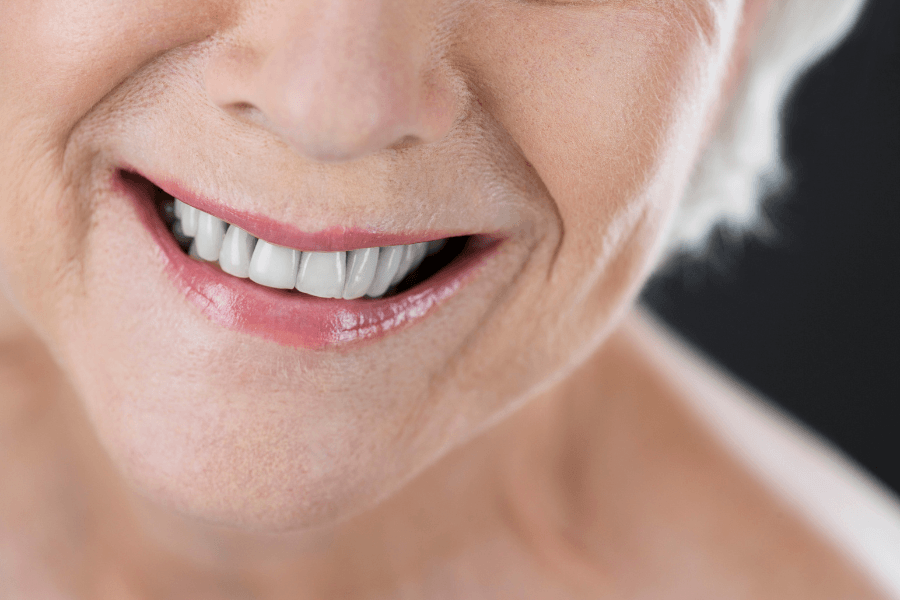
Long-term smile
When we think about aesthetic treatments, it is common to imagine the perfect “before and after”: that bright, aligned, harmonious photo. But in clinical practice, that is only a fraction of the story. A well-planned smile is not designed for the day of the photo. It is planned to chew, speak, age and adapt with you over the years.
Behind every consistent result, there is something that comes before technique, materials and even the choice of procedure: diagnosis. It is diagnosis that reveals how your smile behaves, what the wear patterns are, how the bite distributes forces, what the gingival and bone condition is, and how all of this tends to evolve over time.
When the goal is a long-term smile, the question stops being “what should I do to look good now?” and becomes “how will this treatment behave in 5, 10, 15 years?”
What it means to think about a long-term smile
Planning a long-term smile means seeing each tooth as part of a living, moving system, and not as an isolated piece to be “beautified.” It involves integrating:
- the remaining tooth structure;
- masticatory function and the way forces are distributed;
- habits (dietary, parafunctional, hygiene-related);
- the natural aging of structures;
- gingival, bone and systemic health.
Scientific reviews in prosthodontics and rehabilitation reinforce that the longevity of crowns, veneers, implants and prostheses depends as much on the choice of material as on the quality of occlusal planning, force distribution and periodic maintenance.
In other words, the right technique in the wrong context is unlikely to deliver a long-lasting smile.
Far beyond immediate aesthetics: structure, function and time
Studies show that well-indicated ceramic veneers, bonded mostly to enamel and inserted into a balanced functional context, can present survival rates above 90–95% over 10 years, with good esthetic stability.
When planning ignores:
- how much healthy tooth structure still exists,
- the type of occlusion,
- the chewing and clenching pattern,
the same veneer that looked beautiful in the initial photo starts to suffer fractures, debonding and infiltration within a few years. Specific studies in patients with bruxism show a significant increase in veneer failure rates when the habit is not controlled with occlusal splints and bite adjustments.
That is why, in the office, the starting point is not “veneer or resin?” but “how does this smile function today, and how is it likely to function in a few years?”
Aging, wear and habits: your smile changes with you
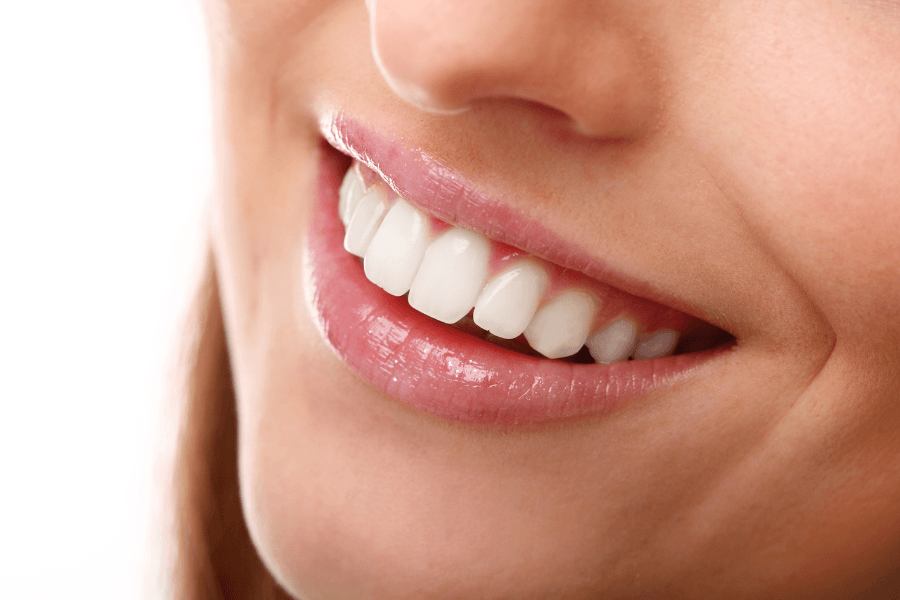
A smile is not static. Throughout life, teeth, gums and supporting structures go through natural changes: wear, small losses in height, changes in position, gingival recession and color changes. Reviews on tooth wear in adults and older adults show that higher levels of wear are associated with worse quality of life and significant esthetic and functional impact.
Some factors that weigh on this process are:
- bruxism (clenching or grinding the teeth, often at night);
- an acidic diet and one rich in pigments;
- habits such as nail biting, chewing on objects or “using the tooth as a tool”;
- inadequate hygiene, which favors gingival inflammation and bone loss;
- the natural aging of muscles and supporting structures.
If smile planning is done while ignoring these elements, the treatment becomes “too beautiful for the reality it will live in.” It was not designed for the efforts, habits and changes that the patient actually has.
Rehabilitations that age well: aesthetics combined with biomechanics
Contemporary dentistry offers extraordinary resources: high-strength ceramics, advanced adhesives, 2D and 3D digital smile planning, mock-ups, photographs and scanners that help simulate and test the result before execution.
But even with all this technology, what guarantees longevity is the biomechanical coherence of the plan:
- restoring teeth while preserving as much remaining structure as possible;
- distributing forces among natural teeth, restorations and, when present, implants;
- choosing materials compatible with the amount of enamel and dentin available;
- respecting the way the patient bites, speaks and chews, adjusting contacts with precision.
Reviews on the longevity of veneers, crowns and rehabilitations show that well-planned cases, with good adherence and control of risk factors, remain stable for many years, while cases in which function was neglected show early failures, even when high-quality materials are used.
Smile, aging and systemic health
Thinking about a long-term smile also means looking beyond the mouth. The literature consistently associates periodontal diseases (chronic inflammation of the gums and bone) with a greater risk of cardiovascular disease, poorer glycemic control in people with diabetes and impacts on other systemic conditions.
In a scenario of increasing longevity, maintaining healthy teeth and supporting tissues means:
- reducing chronic inflammatory foci;
- protecting the cardiovascular and metabolic systems;
- preserving masticatory capacity, proper nutrition and quality of life.
A smile planned only to “look good in the photo” may even impress at first, but if it is not in balance with gingival, bone and systemic health, it tends to come at a high price over time.
Maintenance, follow-ups and adjustments: the secret of a smile that stays with you
No long-term smile plan is complete without a maintenance protocol. Publications in prosthodontics, implant dentistry and rehabilitation reinforce that structured follow-up programs are decisive for the longevity of restorations, tissue stability and patient satisfaction.
During follow-up visits, the focus is not just “cleaning and checking if everything is fine,” but:
- monitoring early wear and microcracks;
- reassessing the bite and signs of muscle or joint overload;
- checking the marginal adaptation of crowns, veneers and restorations;
- monitoring gingival and bone health around teeth and implants;
- adjusting hygiene and habit guidance to the patient’s current reality.
It is in this follow-up that the original plan is refined, ensuring that the smile remains functional, stable and harmonious over time — and not just during the first year after treatment.
Take care of your long-term smile at Clínica Debora Ayala
When we say that “a smile is not for now, it is meant to stay with you,” this is exactly what we mean: respecting time, biology and your health history. At Clínica Debora Ayala, the starting point is never just “what procedure do you want to do?” but “what story brought your smile here, and how does it need to behave in the coming years?”
The evaluation includes structure, function, wear pattern, gingival health, habits, systemic context and esthetic expectations. From this assessment, the treatment plan is built so that technique serves diagnosis — and not the other way around.
If you are looking for a treatment that goes beyond an immediate result and want a long-term smile, planned to age well with you, get in touch and schedule a personalized consultation. Let’s talk about your smile today, but above all, about the smile you want to preserve for the years ahead.
Dr. Debora Ayala – CRO 41.974/SP
Sources:
AlJazairy, Y. H. Survival Rates for Porcelain Laminate Veneers. Clinical, Cosmetic and Investigational Dentistry / PMC. Available at: https://pmc.ncbi.nlm.nih.gov/articles/PMC8184312/. Accessed on: Feb. 18, 2026.
Granell-Ruíz, M. et al. Influence of bruxism on survival of porcelain laminate veneers. Journal of Clinical and Experimental Dentistry / PMC. Available at: https://pmc.ncbi.nlm.nih.gov/articles/PMC4192563/. Accessed on: Feb. 18, 2026.
Chan, A. K. Y. et al. Tooth Wear in Older Adults: A Review of Clinical Studies. Journal of Clinical Medicine / PMC. Available at: https://pmc.ncbi.nlm.nih.gov/articles/PMC10801519/. Accessed on: Feb. 18, 2026.
Weidlich, P. et al. Association between periodontal diseases and systemic diseases. Brazilian Oral Research / SciELO. Available at: https://www.scielo.br/j/bor/a/SsD7R6Rh8yt7gZBqdNCvCzD/. Accessed on: Feb. 18, 2026.
Aldowish, A. F. et al. Occlusion and Its Role in the Long-Term Success of Dental Restorations. Dentistry Journal / PMC. Available at: https://pmc.ncbi.nlm.nih.gov/articles/PMC11624512/. Accessed on: Feb. 18, 2026.
Genesis Publications. Longevity of Porcelain Veneers: A Comprehensive Review. Available at: https://www.genesispub.org/longevity-of-porcelain-veneers-a-comprehensive-review. Accessed on: Feb. 18, 2026.
Teixeira, B. C. et al. Longevity of rehabilitatory treatment with direct and indirect restorations. Research, Society and Development. Available at: https://rsdjournal.org/index.php/rsd/article/view/37369. Accessed on: Feb. 18, 2026.
Aldowish, A. F. et al. Clinical survival and complication rate of ceramic veneers. Journal of Prosthetic Dentistry. Available at: https://www.thejpd.org/article/S0022-3913%2824%2900215-4/abstract. Accessed on: Feb. 18, 2026.
Compendium of Continuing Education in Dentistry. Esthetic and Functional Rehabilitation of Severely Worn Dentition Using 3D Smile Design. Available at: https://compendiumlive.com/2025/10/esthetic/. Accessed on: Feb. 18, 2026.
Nguyen, A. T. M. et al. The association of periodontal disease with systemic diseases. Diabetes Research and Clinical Practice / PubMed. Available at: https://pubmed.ncbi.nlm.nih.gov/32526263/. Accessed on: Feb. 18, 2026.
Herrera, D. et al. Association between periodontal diseases and cardiovascular diseases. Journal of Clinical Periodontology. Available at: https://www.siprec.it/images/siprec/casa-della-prevenzione/documenti/J_Clinic_Periodontology_2023_Herrera_Association_between_periodontal_diseases_cardiovascular.pdf. Accessed on: Feb. 18, 2026.
Decisions in Dentistry. Maintenance Considerations for Prosthodontic Patients. Available at: https://decisionsindentistry.com/article/maintenance-considerations-prosthodontic-patients/. Accessed on: Feb. 18, 2026.
Pocket Dentistry. Implant Prostheses Planning and Maintenance for the Aging Population. Available at: https://pocketdentistry.com/implant-prostheses-planning-and-maintenance-for-the-aging-population/. Accessed on: Feb. 18, 2026.
Read Also
